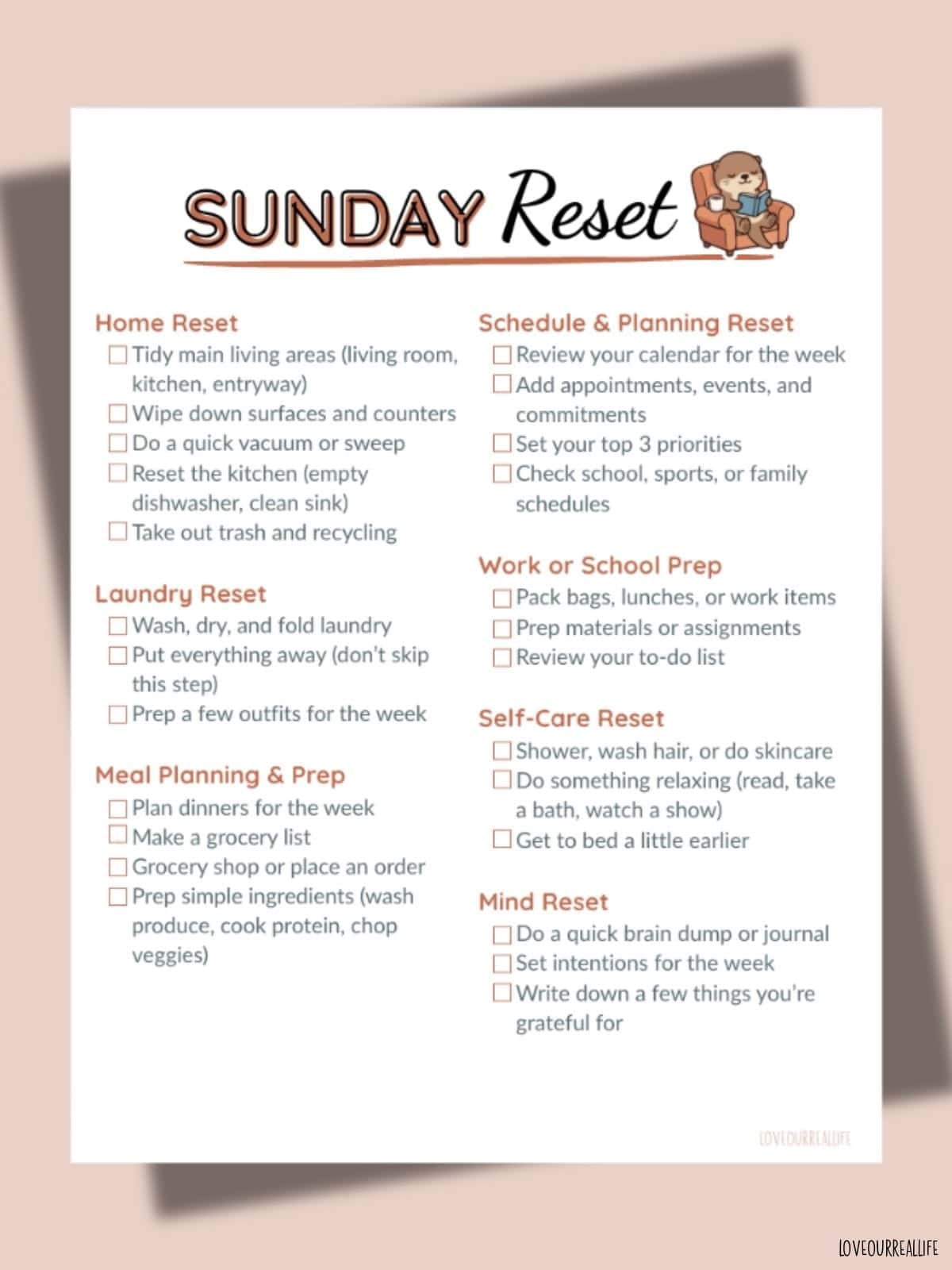
There's a particular kind of dread that creeps in on Sunday evening — sometimes called the "Sunday scaries" — when you realize the week ahead is already looming and your home, your schedule, and your mind all feel slightly unprepared. A Sunday reset routine is designed specifically to counter that feeling, replacing dread with a sense of quiet readiness.
This isn't about turning your Sunday into a rigid chore list. Done well, a reset routine actually feels restorative — a calm, intentional close to the weekend that leaves you feeling more in control, not more exhausted.
What Is a Sunday Reset Routine?
A Sunday reset is a short, repeatable set of tasks you do once a week to tidy your physical space, organize your schedule, and mentally prepare for the days ahead. It typically covers three areas: your home environment, your practical logistics (meals, laundry, calendar), and a moment of personal reflection or rest.
Why Sunday Specifically?
While the exact day doesn't matter — some people prefer Friday or even Monday morning — Sunday works well for most schedules because it sits right at the transition point between rest and routine, giving you a natural checkpoint before the week's momentum picks up.
Part 1: Reset Your Home Environment
You don't need a deep clean every week — that's a recipe for burnout. Instead, focus on the handful of spaces that most affect how your week feels:
- Clear flat surfaces: Counters, your desk, and your nightstand — clutter here creates a subtle, persistent sense of unfinished business.
- Do one load of laundry: Starting the week with clean clothes ready to go removes a common Monday morning stressor.
- Change and make your bed: Fresh sheets make evenings feel more restful, and a made bed sets a calmer tone each morning.
- Empty the dishwasher and take out trash: Starting the week with an empty sink is a small but meaningful reset.

Part 2: Reset Your Schedule
This is where a Sunday reset earns most of its stress-reducing power. Spend 15–20 minutes doing the following:
Review Your Calendar
Look ahead at appointments, deadlines, and commitments for the week. Simply knowing what's coming — rather than being surprised mid-week — removes a significant amount of low-grade anxiety.
Plan Meals Loosely
You don't need a rigid meal plan for every single day. Even a rough idea of 3–4 dinners and a quick grocery list saves the daily "what's for dinner" decision fatigue that eats into your evenings.
Set Three Priorities for the Week
Rather than an overwhelming to-do list, choose just three things that would make the week feel successful if you accomplished them. This keeps your focus clear without adding pressure.
Part 3: Reset Yourself
The most overlooked part of a Sunday reset is the personal, restorative piece — and it's arguably the most important. Without this, the routine becomes just another chore list rather than genuine preparation.
- Take 10 minutes of quiet time: A cup of tea, a short walk, or simply sitting without your phone.
- Reflect briefly on the past week: What went well? What would you do differently? No judgment, just awareness.
- Do one thing purely for enjoyment: A bath, an episode of a show you love, time in the garden — something with no productivity attached.
A Sample Sunday Reset Timeline
- Morning: Slow breakfast, no rush, maybe a walk outside
- Midday: Light home reset — laundry, surfaces, bed linens (45–60 minutes)
- Afternoon: Meal planning and calendar review with coffee or tea (20 minutes)
- Evening: Quiet, restorative activity — reading, bath, or an early night
Keep It Flexible
The routine that works for you might look completely different from this one, and that's exactly as it should be. Some weeks you'll do the full reset; other weeks, just making the bed and glancing at your calendar will be enough. The goal isn't perfection — it's giving yourself a gentle, repeatable checkpoint that helps the week ahead feel a little more manageable.
A Sunday reset routine, done consistently, quietly changes your relationship with the start of the week. Instead of Sunday evenings feeling like the end of freedom, they become a small, grounding ritual that sets you up — calmly, not frantically — for whatever comes next.