If you've ever woken up already tired, felt sluggish through most of the morning, or struggled to fall asleep at a decent hour despite feeling exhausted, the missing piece might not be your bedtime routine at all — it might be what happens in the first hour after you wake up. Specifically, whether or not you get natural light.
Morning sunlight is one of the simplest, most under-appreciated tools for improving both sleep and mood. It costs nothing, takes just a few minutes, and works with your body's biology rather than against it. Here's why it matters and how to make it a natural part of your day.
How Morning Light Affects Your Body Clock
Your body runs on a roughly 24-hour internal clock called your circadian rhythm, which controls when you feel alert and when you feel sleepy. This clock is primarily set by light — especially the bright, blue-toned light of morning sun. When light hits your eyes shortly after waking, it signals to your brain that the day has begun, which helps suppress leftover melatonin (the hormone that makes you feel drowsy) and boosts cortisol in a healthy, time-appropriate way.
Why Timing Matters
Getting this light exposure early — ideally within the first hour of waking — helps anchor your circadian rhythm consistently. This, in turn, makes it easier to fall asleep at the right time that same night, because your body has a clear, un-confused sense of when day starts and ends.
The Sleep Connection: Why Skipping This Backfires
Without that clear morning light signal, your circadian rhythm can drift later and later — a big reason many people feel most awake late at night and struggle to get up in the morning. Artificial indoor lighting, even bright overhead lights, is typically far too dim compared to actual daylight to give your body the same clear signal.
The Mood Benefit
Morning light exposure has also been linked to improved mood and energy throughout the day. Light exposure supports healthy serotonin regulation, and many people notice they simply feel more even-keeled and alert on days they start with some time outdoors or near a bright window.
How Much Light Do You Actually Need?
You don't need direct, intense sun exposure — even on a cloudy day, outdoor light is significantly brighter than indoor lighting. Here's a general guide:
- Bright, sunny day: 5–10 minutes outside is usually enough.
- Overcast day: Aim for 15–20 minutes, since cloud cover reduces intensity.
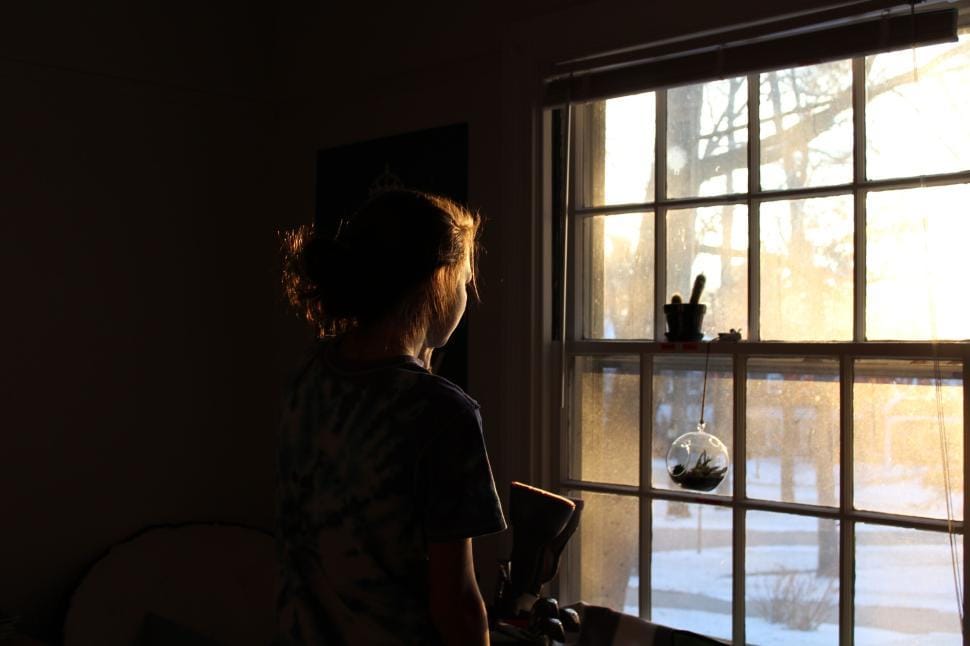
- No time to go outside: Sit near a large, unobstructed window for 20–30 minutes instead.
No Sunglasses (When Safe To Do So)
Sunglasses block much of the light your eyes need to receive this signal. If it's comfortable and the sun isn't too intense, try skipping them during this brief morning window — just avoid staring directly at the sun.
Simple Ways to Build This Into Your Morning
- Open your curtains immediately when you wake up, before checking your phone.
- Take your coffee or tea outside or onto a balcony for a few minutes.
- Walk to get your mail or take a short walk right after breakfast.
- Move your desk near a window if you work from home, so morning hours naturally include more light exposure.
- Pair it with movement — a short walk combines light exposure with gentle exercise for a bigger mood boost.
What If Mornings Are Dark or You Wake Up Before Sunrise?
During darker months or if your schedule has you up before sunrise, a light therapy lamp (10,000 lux, used for 20–30 minutes) can be a helpful substitute. While natural sunlight is ideal, a good light box can still provide a meaningful circadian signal.
Of all the small, science-backed habits you can add to your morning, getting natural light early is one of the easiest and most effective. It requires no special equipment, no extra time carved out of your day, and no complicated routine — just a willingness to step toward a window or outside for a few minutes before the day gets busy. Try it consistently for a week and notice how your evenings — and your mornings — start to feel different.